Knot Logical Game: a mindful hex-tile puzzle for spatial reasoning
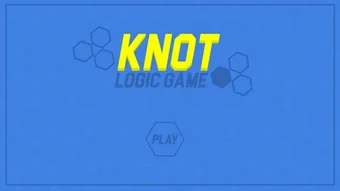
Knot Logical Game, from Wah Shing Gwok Fu Group Limited, is an Android puzzle app that challenges spatial reasoning with tile-based logic problems. Players rotate tiles to align colored line segments, untangle crossings, and complete closed loops as the primary gameplay loop. The experience highlights color-coded pathfinding, progressive difficulty, and a minimalist interface focused on the puzzle grid. It targets casual gamers and puzzle enthusiasts who want short, mentally engaging sessions.
What kind of puzzle loop does Knot use?
In this game, Knot places the player in a pattern-solving loop where each move alters multiple adjacent connections, so planning matters more than speed. The interaction model centers on tapping tiles to rotate their line segments until every path forms a continuous circuit. The emphasis is on spatial visualization and stepwise correction, which suits players who prefer contemplative problem solving over reflex-driven challenges on mobile devices.
Does it provide varied play modes or a focused single-player run?
In this title, the presentation frames a solitary puzzle experience aimed at brain-teaser fans rather than competitive matches. Mechanics combine six-way tile rotation with color-matching and an explicit untangling objective, producing discrete levels that function as self-contained challenges. Controls are simple touch taps to rotate pieces, avoiding complex gestures, and the description positions the game as a relaxed, solo mental exercise.
What does the interface and presentation prioritize?
On launch, the UI foregrounds a clean, minimalist grid and reduced visual clutter so line patterns remain readable. Readable color-coding communicates path identity, and tap-to-rotate input keeps the control scheme direct. The title carries an "Everyone" content rating, making its visuals and interaction suitable across ages. The documentation does not emphasize soundtrack or cinematic presentation, keeping the focus strictly on puzzle clarity.
How does difficulty, replayability, and exposure shape the experience?
Here, progression increases complexity by adding more intersecting routes and color variety, encouraging multi-step planning and iterative attempts to resolve tight configurations. That progression yields replay value through variations in pattern outcomes rather than procedural level generation. The app is ad-supported and has exceeded 500 downloads, indicating modest exposure at present. Players who favour short, repeatable puzzles gain consistent mileage from repeated solves.
Who should play Knot and what to expect
Knot is a measured choice for casual puzzlers who enjoy deliberate, pattern-focused challenges and short sessions of mental work. The level progression and restrained presentation suit players seeking steady, thought-driven puzzles rather than competitive or sprawling content. However, the title's recent release and modest download count suggest limited community-driven expansions at present, so players seeking long-term, expansive multiplayer engagement should consider that constraint.